2026-07-02
Understanding Audio File Metadata: ID3 Tags and Album Art Preservation
A practical guide to audio File Metadata: ID3 Tags and Album Art Preservation, covering track metadata management, download track artwork, and reliable habits for audio libraries, playlists, and web utility workflows.
Understanding Audio File Metadata: ID3 Tags and Album Art Preservation is not just a headline for search traffic. It is a real operating problem for students, creators, travelers, and anyone who keeps a personal listening routine. When a library, playlist, device, or web tool is small, people can get by with memory and luck. Once the collection grows, the missing structure becomes visible: names drift, artwork disappears, links change, caches hide old data, and users lose trust in the result.
A useful listening system starts with one rule: make the information easy to verify later. That means using stable titles, preserving metadata, respecting device limits, and documenting enough context that a future user can understand why a file, playlist, or public link was saved. The target ideas for this guide include track metadata management, download track artwork, ID3 tag editor, preserving audio properties, and track cover extractor, but the deeper goal is a repeatable workflow that keeps audio work clean without making it slow.
The practical problem behind this topic
random collections become hard to search, backup, and reuse once the number of tracks grows. The issue often appears slowly. One week the playlist looks fine, the next week the cover art is missing on a phone, the track order changes in a spreadsheet, or a shared link opens a slightly different view. Good audio organization is not about creating a perfect museum. It is about making everyday listening and review work predictable.
For SpotiDost users, this matters because public Spotify links, playlist tables, artwork, and package-style collection workflows all depend on clear metadata. If the source link is vague or the track names are not checked, every later step becomes harder. A careful first pass can save repeated searches, repeated downloads, and repeated manual fixes.
Core concepts to understand first
The first concept is separation. Audio content, visible metadata, local filenames, artwork, and web links are related, but they are not the same object. A file can play correctly while its tag is wrong. A public playlist can look complete while some items are region-limited. A cover image can be embedded inside a file or loaded separately by a player. Treating those layers separately makes troubleshooting much easier.
The second concept is compatibility. A desktop app, Android media scanner, iOS storage area, car stereo, smart TV, browser tool, and CDN cache do not all read data in the same way. The safest habit is to keep the original reference, use common formats where possible, and test the final result on the actual device or page where people will use it.
A workflow that works in real life
Start with the source. Copy the exact public link or identify the exact file before doing any cleanup. Next, check the visible title, artist, duration, artwork, and sequence. Then decide the storage shape: single files for individual tracks, folders for albums, CSV or JSON for lists, and a separate note when a link was used only as a reference. This small order prevents confusion later.
After the source is clear, apply clear folders, consistent naming, stable metadata, and a simple review pass before saving a collection. Do not do every task by hand if a tool can do it consistently, but do not trust automation blindly either. Automation is good at repeating a rule. Humans are better at spotting the wrong version, the wrong remix, the wrong cover, or a playlist item that does not belong.
Metadata and naming rules
Metadata should answer simple questions: what is this, who made it, where did it come from, what collection does it belong to, and what image represents it. For audio files, tags and artwork carry that information. For web workflows, page titles, URL parameters, JSON fields, and spreadsheet columns play the same role. The field names change, but the job is the same.
A practical naming convention is short, stable, and boring. Use track number, artist, title, and collection when needed. Avoid decorative characters that break on older devices. Keep dates in a sortable form such as YYYY-MM-DD when the date matters. If the library crosses thousands of tracks, consistent naming becomes a performance feature, not just a style preference.
Common mistakes to avoid
avoid treating every copied link or audio file as permanent until the title, source, artwork, and purpose are confirmed. Another common mistake is mixing temporary cache data with permanent archive data. Streaming apps and browsers often keep local data to speed up repeated use, but cached data is not a reliable archive. If the item matters, export or document it in a format you control.
A second mistake is converting or moving files before checking quality. If the original was already low bitrate, re-encoding it to a larger file will not restore lost detail. If the tags were corrupt, copying the file to five devices only spreads the problem. Audit first, then sync.
A quick checklist
Before you treat the result as finished, confirm the title, artist, duration, artwork, collection name, file or link source, and target device. For playlist or archive work, also check order, duplicates, region-limited items, and whether the list should be saved as text, CSV, JSON, or a normal folder structure.
For web tools, check that forms validate the URL, that CORS and cache behavior are intentional, that mobile layouts do not hide important text, and that public pages explain the service clearly. These small checks are the difference between a tool that feels fast once and a tool that keeps working under real traffic.
Where SpotiDost fits
SpotiDost is useful when the starting point is a public Spotify URL and the user needs a clean page for tracks, albums, playlists, artists, artwork, or collection review. It should be treated as a workflow helper, not as a replacement for rights, ownership, or careful listening. The responsible path is to verify the result, use clear metadata, and respect the rules that apply in your location.
For article topics like audio File Metadata: ID3 Tags and Album Art Preservation, the same principle applies: a good tool should reduce repeated work without hiding what is happening. Clear result pages, progress messages, readable labels, and stable links help users make better decisions before they save or share anything.
Research notes and standards
This guide follows practical behavior seen across audio metadata standards, browser APIs, device storage documentation, and CDN/web platform guidance. Technical details change over time, but the durable lesson is consistent: structured data beats guesswork. When standards exist, use them; when a platform has device-specific behavior, test on the real target.
Useful references for this topic include ID3.org ID3v2 structure. These sources are not required reading for every listener, but they are worth knowing when you maintain a large library, publish a web utility, or troubleshoot device-specific audio behavior.
Final takeaways
The best setup is the one you can explain six months later. Keep the source clear, preserve important metadata, use common formats, and test the final result where it will actually be used. That advice works for a study playlist, a home server, a web utility, a podcast feed, a codec experiment, or a large personal archive.
If you remember only one thing from this guide, make it this: build a workflow that can survive growth. A small collection forgives messy habits. A busy tool, a large playlist, or a multi-device archive does not. Clean inputs, readable metadata, and scheduled review save time every time the library grows.
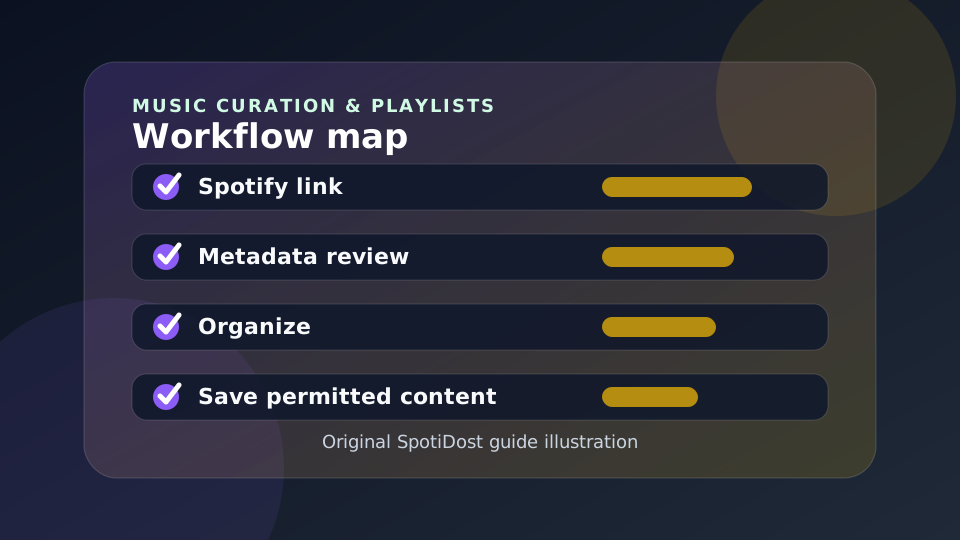
Plan the workflow before touching the library
The most reliable way to handle audio File Metadata: ID3 Tags and Album Art Preservation is to decide the workflow before opening ten tabs, copying links, or moving files between devices. Start by writing down the final use case in one sentence. A study playlist, a creator background folder, a car stereo collection, and a family media archive all need different checks. When the purpose is clear, the rest of the decisions become easier: which metadata matters, which image size is enough, which names should be preserved, and which items should be skipped instead of forced into the collection.
A good plan also separates quick review from permanent organization. Quick review answers whether the link, title, and visible details are correct. Permanent organization decides where that result belongs, how it should be named, and whether it needs a backup. Mixing those two jobs is why many libraries become messy. People save first, rename later, forget the source, and then repeat the same search when a device shows the wrong artwork. A small checklist prevents that cycle and makes large collections feel manageable.
For teams and shared households, document the workflow in plain language. Do not rely on one person remembering every folder rule. A short note with examples is enough: how to name a track, how to label an album folder, when to keep artwork separately, where to store playlist exports, and how to record the original public link. That note is useful even for a solo listener because future you will not remember why a file was saved with a different title or why a playlist was split into two collections.
Use visuals as part of the review, not decoration
Images are not only decoration in an audio workflow. Cover art, screenshots, and visual checklists help users catch mistakes that text alone can miss. A title may look correct while the artwork clearly belongs to a different release. A playlist may have the right name while the thumbnail suggests a remix, radio edit, or user-made compilation. When you review visual cues alongside duration and artist information, you reduce the chance of saving the wrong item.
For public web pages, images also help readers understand the process before they use a tool. The safest pattern is practical: show the input, show the review step, show the final organization step, and label the image source. Avoid using celebrity photos, album art, or copyrighted screenshots as decorative blog images unless you have permission or the image is clearly used under a valid policy. Original diagrams are safer for evergreen tutorials because they explain the workflow without depending on a third-party asset that might later disappear.
If you use free image providers such as Pexels, Unsplash, Wikimedia Commons, or Openverse in future manual posts, keep the credit near the image and record the source URL in the article draft. Do not paste random images from search results. The long-term goal is not only to make the page look richer; it is to make the page trustworthy for users, ad reviewers, and search systems that evaluate whether the site is operating responsibly.
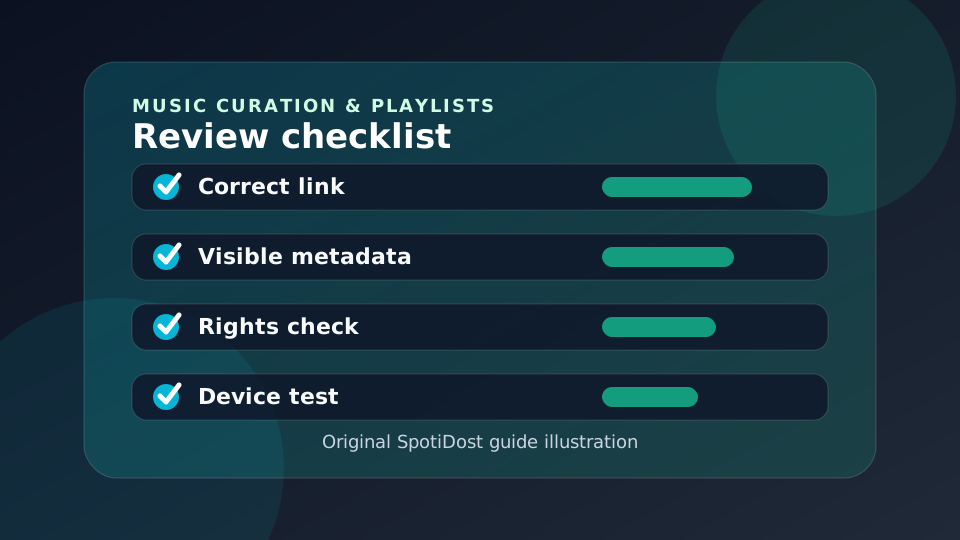
Quality control for bigger collections
Quality control should become stricter as the collection grows. A five-track folder can be fixed by hand. A five-hundred-track archive needs rules because one small mistake repeats across many files. For track metadata management, download track artwork, ID3 tag editor, preserving audio properties, and track cover extractor, the important checks are consistency, traceability, and reversibility. Consistency means similar items are named and stored the same way. Traceability means you can identify where the item came from. Reversibility means you can return to a clean source or reference if a later edit was wrong.
Create a small review sample before processing a full album, playlist, or device sync. Pick three or four items from different parts of the collection: the first track, a middle track, a long title, and an item with special characters. If those examples survive the workflow, the rest of the collection is more likely to work. If those examples fail, stop early. This habit saves time because it catches broken filenames, mobile layout problems, bad artwork sizes, and player compatibility issues before the entire library is changed.
Do not let speed hide failure. Fast tools are useful only when the result is correct. Progress bars, logs, retry limits, and clear error states matter because a silent failure creates more work than a visible one. If an item cannot be verified, mark it as skipped or needs review. That is better than forcing a questionable result into a library and discovering the mismatch later when the user has already trusted the collection.
Keep the article and tool experience aligned
A helpful tutorial should match the actual product behavior. If the public page says users can review metadata, the app should show metadata clearly. If the article says the workflow is protected, the login flow should not feel like a trap. If the page asks people to respect rights, the buttons and labels should avoid promising something broader than the service can responsibly provide. This alignment is especially important for sites that serve both educational content and an interactive tool.
For SpotiDost, that means the public page should explain link review, metadata, artwork, tracklists, and personal library organization in plain language. The protected app can then handle the interactive step after sign-in. Users should not need to understand the business reason for that split. They only need a clear path: learn what the page does, open the app when ready, verify the result, and use the feature only for content they own, created, have permission to use, or can legally access.
This is also where analytics should be used responsibly. Track whether users reach the app, whether forms submit, whether result pages load, and whether errors are visible. Do not let analytics block the workflow. A metrics script, ad script, social widget, or donation banner should never decide whether a user can complete the core action. The best user experience is boring in the right places: predictable navigation, clear wording, fast pages, and no surprise blockers.
Maintenance schedule
Treat audio File Metadata: ID3 Tags and Album Art Preservation as a maintenance habit, not a one-time cleanup. Review the library after major device changes, app updates, platform changes, or large playlist edits. A simple monthly check is enough for most people: open the latest collection, confirm that artwork appears, search for a few titles, play a sample item, and verify that exports or backups are still readable. For public tools, add uptime and error checks so user-facing failures are noticed before they become normal.
Finally, keep a small changelog for important library rules. If you change naming style, folder layout, artwork size, or export format, write it down with the date. This does not need to be formal documentation. A text file in the root of the archive is enough. The point is to make future maintenance less dependent on memory. Large libraries become easier when every important decision leaves a trace.